
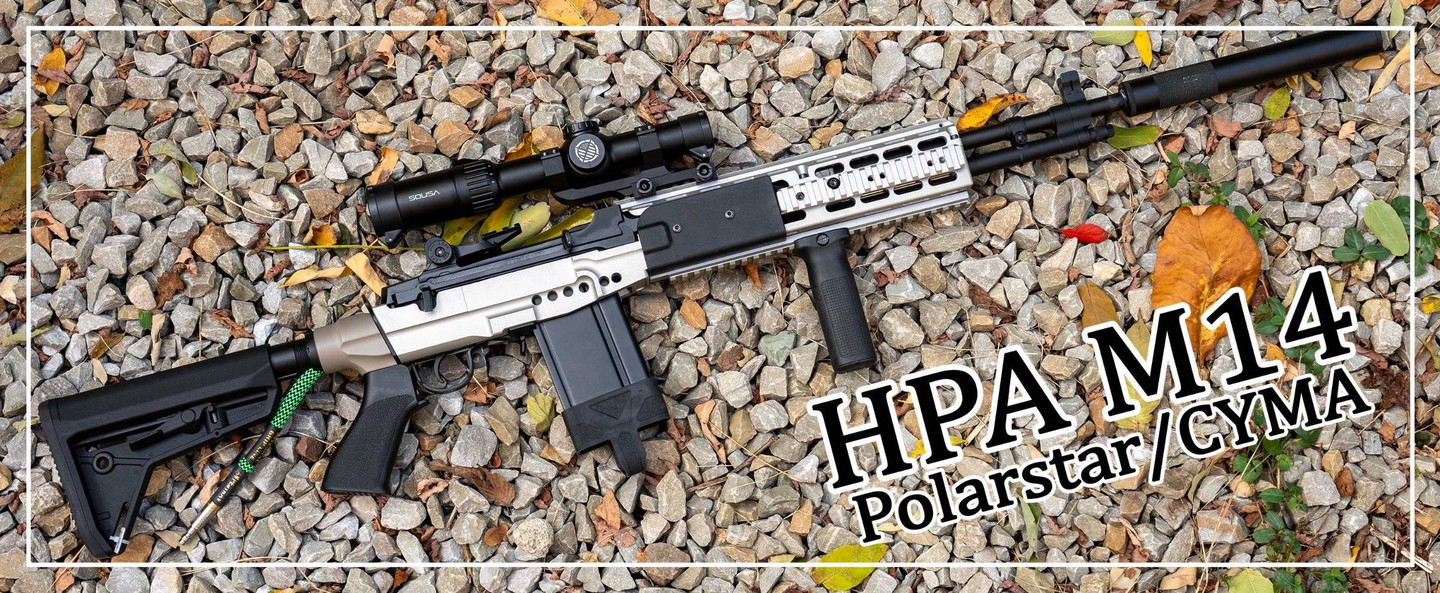
The M14 has long held its place as a classic battle rifle in U.S. military history, developed and adopted shortly after the Korean War. While it served as the standard infantry rifle for a relatively brief time — officially phased out in 1968 after just 11 years — its legacy has endured well beyond its frontline service.
Since then, the M14 has seen various upgrades and adaptations for its continued service, most notably in its role as a Designated Marksman Rifle (DMR). Over the decades, it’s become deeply embedded in military and civilian gun culture, often blurring the lines between historical authenticity and modern reinterpretation. That overlap, especially with civilian M1A information, can make researching this rifle a bit of a maze.
One of the fascinating parts of this rifle is watching the graduation from the M14, to the M14E1 prototype, to the XM21/M21 in Vietnam, the USMC DMR in Iraq and Afghanistan, the M39 with the Crane Chassis, and then the MK14 with the Navy and USMC. Variations of the M14 are also seeing conflict today in modern wars, making it one of the few longest serving small arms in the U.S.
Today's blog is going to be focused around a staff members build, Trevor from the Amped Retail staff wanted to get in to the DMR role. Talon (author) from Amped Customer Service Team has had previous experience working on Airsoft replicas, specifically around the M14 gearbox, which is the version 7. The Airsoft M14 replicas can be rather complicated, I even noted on a few Wednesday Live Streams that M14's have been some of the more complicated builds that I have worked on. Trevor wanted very much to replicate his Call of Duty: Modern Warfare 2 loadouts which features the M14 EBR. I was able to set some time to the side and spend a day with careful disassembly and reassembly of the M14, utilizing the Polarstar F2 with the offset nozzle. Which is where we get into the build materials.
Parts:
One additional note is that you do not NEED to purchase an M14 engine, you can purchase the front end of the engine (the same way you would purchase a different nozzle) so if you have a spare F2 lying around you can just get some different parts to install it.


For the F2 we are using the CYMA M14 model, the difference is nozzle length and nozzle position. You cannot install the G&G or TM into the CYMA model otherwise you either dont the nozzle to align correct or the BB's are not going to get fed into the hopup unit or feed from the magazine. Inside the box is going to feature something that you might not have seen before, there is going to be the Engine, FCU, FCU wire, and a Universal Plugboard. There are photos later in the blog that is going to illustrate where and how these are supposed to attach.
WARNING - The F2 installation is going to require more tools than normal, even a soldering tool to attach wiring to trigger contacts. You do need a collection of screw drivers, allen tools, and pliers to completely disassemble and reassemble the M14 rifle.

By this point you can also begin removing the bolts holding the handguard together. 2 large faced bolts facing horizontal and 6 vertical bolts holding the top of the handguard to the bottom portion. With those bolts removed you can remove the triggerguard. This is fun because it is extremely similar to how the M14 disassembles in real life. Loop a finger on the part of the triggerguard behind the trigger and press it towards the grip. Simultaneously you will pull it away from the body of the rifle, but the spring of the trigger guard should be able to get it to pop up and away from you. It can be pulled away from the stock, and at this point there shouldnt be anything that is holding the barrel assembly to the stock. Very carefully wiggle the barrel assembly away from the stock until you have the separated parts.


The next part is one of the most critical; you have the universal plugboard that is going to be the most complicated part. Most people are going to get this confused because they see this board that has a 5 pin and a collection of 2 pins that surround the 5 pin. Tech's may not realize until they post a very frustrating Reddit post about a broken board that the 2 pin connectors were incorrectly installed. So Im going to make this really easy; FROM POLARSTAR, THE CON 1 (connector 1) IS FOR NOZZLE SOLENOID, CON 2 IS THE POPPET SOLENOID, CON 3 IS THE SELECTOR INPUT, CON 4 IS THE TRIGGER INPUT.
What does that mean exactly? The Universal board is designed to work with the Polarstar engines, and is most often seen when engines need to be put into unique builds or designs like the M14. The CON1 is going to be for the nozzle solenoid. Systems like the F2 that we are using is what is referred to as a dual solenoid where the FCU is telling the 2 solenoids to open and close air flows at different timing for more efficienecy. You will need to know which solenoid is which, but if you zoom in and reference the photo you can probably figure it out. Single solenoid engines like the Jack are going to have the one solenoid connect to this connector. The nozzle solenoid is going to do most of the work, opening and closing as a basic function to get the system to work. The CON2 is going to be for the poppet solenoid, primarily a function of the second solenoid that is going to make the entire system perform with a little more efficiency compared to the Jack or F1. CON3 is for the selector position, certain builds are going to have an additional board that is going to tell the system what 'mode' the rifle is in. CON4 is the trigger and typically needs to be soldered to the trigger contacts to complete a circuit, telling the system to fire when the trigger is pulled.
In the case of our Polarstar F2 we are going to be using three of the 2-pin slots on the Universal Board. The very top solenoid on the F2 is going to connect to the CON 1, bottom solenoid goes into the CON2, the FCU wire plugs into the 5 pin slot, and the CON4 is going to have the blue and black wires that will be soldered to the trigger contacts.
You may have also noticed that the packaging for the M14 engines are marked 'Semi Auto Only' and this is because there is not a good way to incorporate the selector switch on the side of the gearbox to allow selectable fire modes. What you can do, is set the S1 and S2 to -01 for semi auto (you dont need to but I do it just so its there in the FCU) and if you have a field near you that is allowing a special night you can change your S1 and S2 to -00 for full auto, OR -03 for 3 round burst if you did not want to do a burst of auto.


You should also be careful of the wiring, you have several wires that are going to be sitting loosely in the gearbox. There is not a great spot for those wires to sit so I opted to tighten them together and position them behind the engine. I have also put the wires leading to the trigger contacts through a small sliver of space in the cylinder window. You can choose to have the wires lead out of the motor hole, so long as the wires get soldered to the trigger contacts. Theres no specific order the wires need to be soldered, so long as they are attached to the copper plates. The copper plates are needed to complete the circuit for the engine to recognize there is a 'shot'.
The very last thing is that you will need to cut the top of the motor cage, there is a specific cut on the cage that is used by the trigger guard when you install it. (I totally did not forget to still that piece, make sure that you include that piece) You can reference the image directly below for the piece that you will need to cut away.

But enough about externals, WE STILL NEED TO CUT A SPOT FOR THE LINE!! With this partucular build, we have the inclusion of the buffer tube. This is going to give us a little room to drill a hole in the rear receiver, right before the buffer tube attaches. I know that alot of people are going to wonder if you can use the pistol grip but in the case of the M14 that is not an option. The way that the grip is attached leaves no room for a grip line with a weave over it. If you look at the pictures below you can see that the blocks that the grip attaches just does not work for us. This leaves only a few options; either the thinnest possible through the grip (next to impossible), make a cut through the side of the receiver (which isnt necessary), make a cut through the very back (that we opted to do), or use magic to get the air to the engine (if you figure that out please let me know, I love magic!).
The FCU goes right into the buffer tube where the batteries were originally designed to go. With the thinner FCU wires theres no issues with putting the smaller battery and FCU into the buffer tube. Some people might have a rifle what was front wiring. You can use a mock PEQ box to hold the FCU and battery, or I have seen people just leave it in the handguard kinda loose. ITs dealers choice what you want to have.


For Full Stock M14's you will need to cut a hole in the bottom of the grip that is a little easier to cut and manage. If you are using a 'classic' M14 EBR then you are going to have an even harder time getting the line to work with that stock. Its a pain in the butt but can be done.
After that, its dialing in the hopup for heavier weight BB's and whatever inner barrel/bucking combo you have installed into your M14. Oh, and programming the FCU to handle your barrel length and air pressure to get the system to fire. When I finished the install I took it outside and used 2 magazines to dial in the settings. The dP and dn were the ones I really messed with. The dP is the Poppet Dwell and controls how much air is being used or allowed through the nozzle. This was bumped up to allow more air to flow through a longer length inner barrel and allow more air behind a heavier weight BB. Since you are using a DMR rifle you are going to want something that can carry heavy BB's a longer distance. The dn is the Nozzle Dwell and this controls the length of time the nozzle is held to the rear before going back forward to load the next BB into the chamber. I adjusted this because I know that M14 magazines do not have a high rate of fire spring installed in their magazines. That and paired with heavier weight BB's in mags means that there is a higher chance of jams or inconsistent shooting.
So that’s the build! The M14 isn’t the friendliest platform to work on, but it’s definitely one of the most rewarding once it’s running right. The F2 makes it an absolute beast on the field.
If you’ve got your own M14 build, or questions about this one, drop a comment or hit us up — we’d love to see what others are doing with this iconic platform.